Top 5 Myths About Formaldehyde-free Cabinetry Debunked
Worried formaldehyde-free cabinets are expensive, flimsy, or boring? Think again. They’re only 5-15% pricier than traditional options but offer superior durability, extensive style choices, and significantly reduce exposure to a known carcinogen that can cause respiratory issues.
Key Takeaways:
- Formaldehyde-free cabinets typically cost only 5-15% more than traditional options, not the significant premium many expect
- Modern formaldehyde-free cabinets are just as durable as traditional options, using alternative adhesives like polyurethane and soy-based glues
- Today’s market offers extensive style options for formaldehyde-free cabinetry, from modern minimalist to traditional designs
- Formaldehyde exposure from traditional cabinetry can cause respiratory irritation, allergic reactions, and has been classified as a human carcinogen
- Choosing truly formaldehyde-free cabinetry requires understanding industry standards and manufacturing processes
The Truth About Formaldehyde in Your Kitchen Cabinets: Health Impacts and Risks
When you’re planning a kitchen renovation, the cabinets you choose impact more than just your home’s aesthetics—they can significantly affect your indoor air quality and family’s health. Many homeowners don’t realize that traditional cabinets often contain formaldehyde, a chemical classified as a known human carcinogen by the International Agency for Research on Cancer. Health-conscious homeowners increasingly seek guidance from experts like those at Kitchen Remodeling Companies, who help sort through the confusing world of truly non-toxic cabinetry options.
Formaldehyde isn’t just present in cabinets—it’s widely used in many building materials. In cabinetry, it’s commonly found in the adhesives used to manufacture particleboard, MDF, and plywood—core materials in most standard cabinets. The concerning part is that these materials can emit formaldehyde gas for years through a process called off-gassing, potentially causing respiratory irritation, allergic reactions, and other health issues.
Myth #1: Formaldehyde-Free Cabinets Cost Significantly More
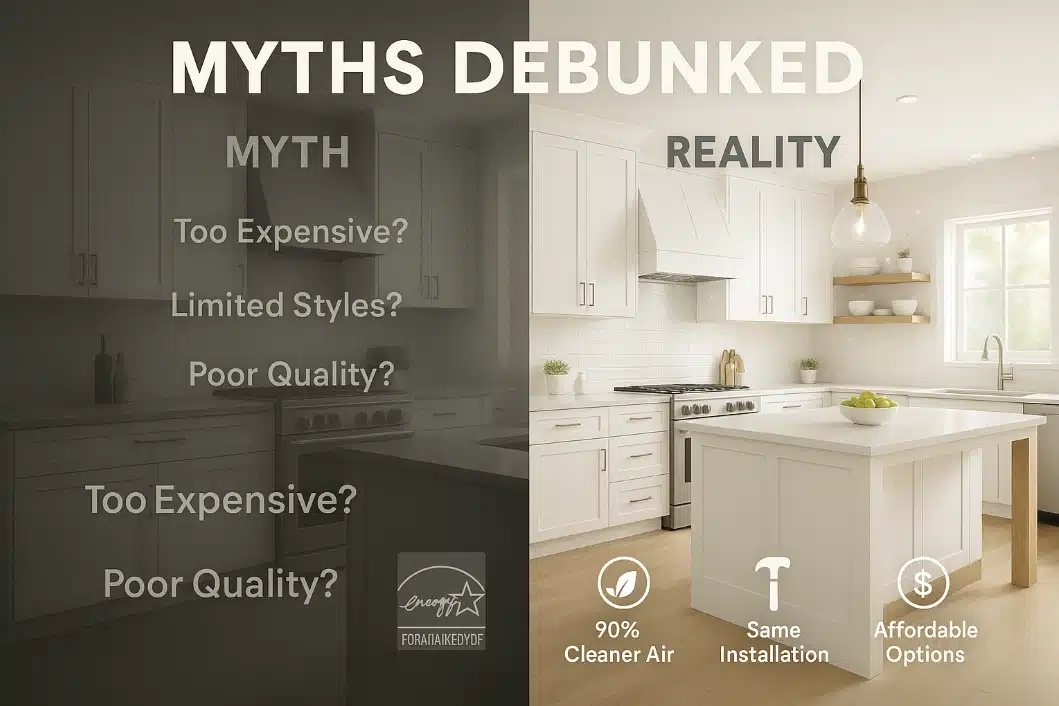
1. Today’s price difference is only 5-15% higher
One of the most persistent myths about formaldehyde-free cabinetry is that it will drain your renovation budget. This misconception stems from the early days of eco-friendly building materials when green alternatives often carried hefty premium prices due to limited production and specialized manufacturing.
The reality is much more affordable. Thanks to increased consumer demand and manufacturing efficiencies, the price gap has narrowed dramatically. Current market research shows the typical price difference between traditional and formaldehyde-free cabinets is now just 5-15%—a modest investment considering the health benefits they provide.
2. Long-term value: durability and health cost savings
When evaluating the true cost of formaldehyde-free cabinets, it’s essential to consider the long-term value they provide. These cabinets often deliver greater durability due to their high-quality construction and materials. This means fewer replacements and repairs over time, saving you money in the long run.
3. Increased home resale value with non-toxic materials
Homes with non-toxic materials increasingly command premium prices in today’s health-conscious real estate market. Formaldehyde-free cabinetry can be a selling point that distinguishes your home from others, potentially increasing its resale value and making your initial investment pay dividends when it’s time to sell.
Myth #2: Formaldehyde-Free Cabinets Are Less Durable
1. Alternative adhesives like polyurethane and soy-based glues
Many assume that formaldehyde-based adhesives are necessary for creating strong, long-lasting cabinets. This simply isn’t true. Modern formaldehyde-free cabinets use advanced binding alternatives that match or exceed the performance of traditional adhesives.
Polyurethane-based binders and soy-based glues represent just two of the innovative solutions manufacturers have developed. These alternatives create strong bonds between wood particles without releasing harmful gases into your home. The science behind these adhesives has advanced significantly, creating products that maintain structural integrity while prioritizing health.
2. Superior moisture resistance compared to traditional options
Contrary to popular belief, many formaldehyde-free cabinets actually outperform traditional options for moisture resistance. Formaldehyde-based adhesives can break down when exposed to moisture over time, potentially leading to swelling and warping—common problems in kitchen environments where humidity levels fluctuate.
The alternative adhesives used in formaldehyde-free cabinets often create more stable bonds that resist moisture penetration. This makes them particularly well-suited for kitchens, bathrooms, and other areas where water exposure is common. For homes in humid climates, this improved moisture resistance can significantly extend cabinet lifespan.
3. Equal or better warranty coverage from manufacturers
Perhaps the most telling evidence of durability comes from manufacturers themselves. Companies producing formaldehyde-free cabinets typically offer the same—or in some cases better—warranty coverage as those making traditional cabinets. Manufacturers wouldn’t provide these guarantees if their products weren’t built to last.
Many leading cabinet makers now offer identical warranty terms across both their traditional and formaldehyde-free lines, demonstrating their confidence in the durability of healthier alternatives. When shopping for cabinets, compare warranty coverage to confirm you’re getting a product designed for long-term performance.
Myth #3: Limited Style Options Are Available
1. From modern minimalist to traditional designs
The misconception that choosing formaldehyde-free cabinets means sacrificing style is completely outdated. Today’s market offers these healthier options in virtually every design aesthetic, from sleek contemporary to ornate traditional styles.
Whether you prefer clean, handleless cabinets with minimalist appeal or detailed cabinet fronts with decorative molding, formaldehyde-free options exist to match your vision. Design limitations that may have existed in the early days of eco-friendly cabinetry have long since disappeared as manufacturers have expanded their offerings.
2. Full range of wood species and finishes
The variety of materials and finishes available in formaldehyde-free cabinetry has expanded dramatically. You’ll find options in virtually every wood species popular in kitchen design, including oak, maple, cherry, walnut, and more exotic options. Each carries its unique grain patterns and natural characteristics.
Beyond natural wood, today’s formaldehyde-free cabinets come in countless finishes—from matte to high-gloss, painted to stained, distressed to ultramodern. These finishes use low-VOC or zero-VOC products that maintain air quality while providing beautiful, durable surfaces.
3. Custom options for personalized aesthetics
For homeowners seeking truly unique kitchens, custom formaldehyde-free cabinetry offers unlimited design potential. Custom cabinet makers have embraced healthier materials, providing bespoke solutions that reflect individual style preferences while maintaining strict health standards.
From specialized storage solutions to unique door styles, custom formaldehyde-free cabinets can be tailored to your exact specifications. Many custom cabinet makers now specialize exclusively in non-toxic options, bringing decades of craftsmanship to healthier home design.
4. Same high-quality hardware and accessories
The hardware and accessories available for formaldehyde-free cabinets are identical to those used in traditional cabinetry. This includes soft-close hinges, full-extension drawer glides, organizational inserts, and decorative hardware options. The functional elements that make modern cabinets so convenient and user-friendly are fully compatible with healthier cabinet construction methods.
Myth #4: Special Installation Skills Are Required
1. Identical installation process to traditional cabinets
Some homeowners worry that formaldehyde-free cabinets require specialized installation techniques or procedures. This myth likely stems from confusion about how these cabinets are manufactured versus how they’re installed in your home.
In reality, the installation process for formaldehyde-free cabinets is exactly the same as for traditional cabinets. The construction details that make them healthier—like alternative adhesives and non-toxic materials—don’t change their external dimensions, mounting points, or hardware requirements. Installers follow the same steps and procedures they would use for any quality cabinet system.
2. No specialized tools or techniques needed
Professional installers won’t need to invest in any new tools or learn any special techniques to install formaldehyde-free cabinets. Standard carpentry tools and cabinet installation equipment work perfectly with these healthier alternatives.
From measuring and leveling to securing cabinets to walls and connecting them to each other, the technical aspects of installation remain unchanged. This consistency in installation methods means there’s no additional complexity or learning curve for your installation team, helping ensure a smooth, efficient renovation process.
Myth #5: Health Benefits Are Minimal or Unproven
1. 90% reduction in indoor formaldehyde levels
Perhaps the most dangerous myth is that the health benefits of formaldehyde-free cabinets are minimal or not backed by science. This couldn’t be further from the truth. Studies have consistently shown that switching to formaldehyde-free cabinets can reduce indoor formaldehyde levels by up to 90% compared to homes with traditional cabinetry.
This dramatic reduction in formaldehyde exposure creates a significantly healthier living environment. Consider that traditional cabinets can continue emitting formaldehyde gas for years—even decades—after installation. By choosing formaldehyde-free alternatives, you’re making a decision that positively impacts your indoor air quality for the entire lifespan of your cabinets.
2. Clinically significant for asthma and allergy sufferers
For households with members who have asthma, allergies, or chemical sensitivities, the benefits of formaldehyde-free cabinetry can be immediate and profound. Formaldehyde is a known respiratory irritant that can trigger or worsen asthma attacks, cause eye and throat irritation, and exacerbate allergic responses.
Many homeowners report noticeable improvements in respiratory symptoms after replacing traditional cabinets with formaldehyde-free options. Children, elderly family members, and those with existing respiratory conditions often experience the most significant benefits, as these groups tend to be more vulnerable to chemical exposures.
3. Formaldehyde classified as a known human carcinogen
Beyond immediate comfort and respiratory health, there are compelling long-term health reasons to choose formaldehyde-free cabinetry. Formaldehyde isn’t just an irritant—it’s classified as a known human carcinogen by the International Agency for Research on Cancer, a designation based on extensive scientific evidence linking formaldehyde exposure to certain cancers.
While occasional, brief exposure to low levels of formaldehyde may pose minimal risk, the continuous, long-term exposure that comes from living with formaldehyde-emitting cabinets presents a more significant concern. Choosing formaldehyde-free options reduces this unnecessary cancer risk for you and your family.
4. Continuous off-gassing from traditional cabinets for years
Unlike temporary exposures to formaldehyde that dissipate quickly, traditional cabinets made with formaldehyde-based adhesives can continue to release the chemical into your home for years through a process called off-gassing. This means your exposure isn’t a one-time event but rather a continuous, daily dose of a known carcinogen.
The off-gassing process is typically highest when cabinets are new and gradually decreases over time, but it can continue at lower levels for the entire lifespan of the cabinets. Formaldehyde-free alternatives eliminate this persistent source of chemical exposure, creating a healthier long-term living environment.
Your Next Steps: How to Choose Truly Formaldehyde-Free Cabinetry
Armed with accurate information about formaldehyde-free cabinetry, you’re now better equipped to make healthier choices for your home. When shopping for truly formaldehyde-free options, look for third-party certifications that verify low or zero formaldehyde emissions, ask manufacturers about the specific adhesives and materials used in their products, and work with knowledgeable professionals who understand the importance of healthy building materials.
Remember that not all “eco-friendly” or “green” cabinets are necessarily formaldehyde-free. Some products may have reduced formaldehyde levels but still contain some of the chemical. For truly formaldehyde-free options, look for cabinets made with solid wood construction or those specifically labeled as using NAF (No Added Formaldehyde) or ULEF (Ultra-Low Emitting Formaldehyde) adhesives.
By choosing formaldehyde-free cabinetry, you’re not just designing a beautiful kitchen—you’re creating a healthier living environment that will benefit your family for years to come. If you’re looking for expert guidance on selecting truly formaldehyde-free cabinetry for your home, M&J Trusted offers specialized consultation services to help you make these important health decisions.
How Kitchen Remodeling Companies Can Leverage This Content
This informative article about formaldehyde-free cabinetry can be adapted and repurposed across multiple marketing formats to help kitchen remodeling companies establish expertise, build trust with potential clients, and differentiate their services in a competitive market. Trustedmarketing.se specializes in helping kitchen remodeling companies transform technical content like this into powerful marketing campaigns across all digital channels, ensuring maximum reach and engagement with potential customers.