The Ultimate 2025 Guide: 6 Content Distribution Platforms That Drive Google Traffic!
Getting your content seen by the right people has become the biggest challenge facing content creators today. A recent Ahrefs study found that more than 96% of content gets no traffic from Google at all. That’s not just disappointing—it’s devastating for anyone investing time and money into content creation.
But here’s what most people don’t realize: the problem isn’t your content quality. The real issue is distribution. Multichannel marketing with the right approach can increase reach by 300%, yet most businesses still rely on hoping their content will magically appear in Google’s results.
Why Content Distribution Platforms Matter More Than Ever
Think about this: you spend weeks crafting the perfect blog post, video, or infographic. You publish it on your website and… crickets. Sound familiar?
No matter how well-crafted and valuable your content is, it may not achieve its desired outcomes if it doesn’t reach the right audience or if it isn’t distributed across various channels. That’s where content distribution platforms come in.
These platforms act as your content’s megaphone, pushing your material across multiple channels simultaneously. Instead of hoping someone stumbles across your content, you’re actively placing it where your audience already spends time.
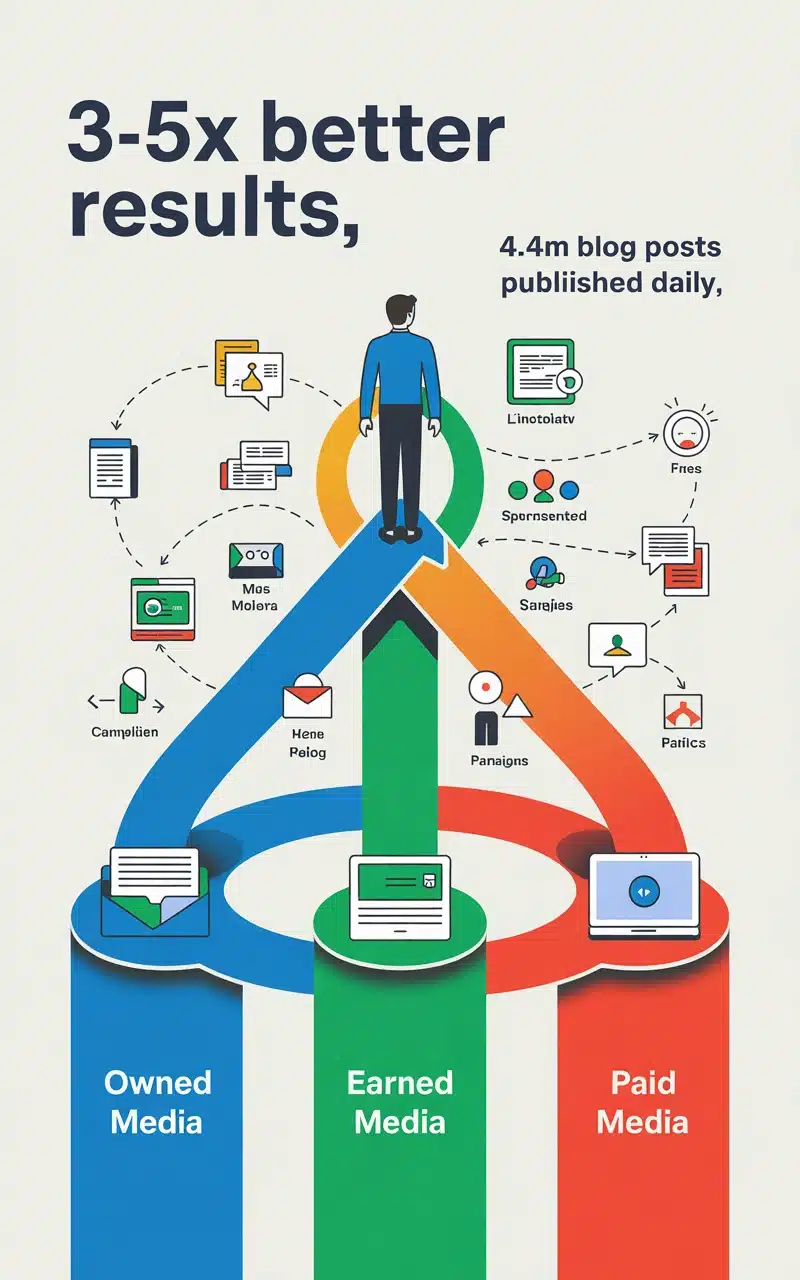
The Three Types of Content Distribution You Need to Know
Before diving into specific platforms, you need to understand the distribution landscape:
Owned Channels: Platforms you control completely
- Your website and blog
- Email newsletters
- Social media profiles
Earned Channels: Third-party platforms that share your content organically
- Quoted is excellent for connecting with journalists and earning media mentions. Reddit allows you to participate in discussions that can lead to viral shares
- Industry publications
- Influencer mentions
Paid Channels: Platforms where you pay for distribution
- Google Ads. It is excellent for promoting your content across search and display networks
- Social media advertising
- Content syndication services
Top Content Distribution Platforms: Features and Performance Analysis
1. HubSpot: The All-in-One Solution
What It Does: HubSpot is a useful tool for automating manual marketing tasks, nurturing leads, creating ad campaigns, and having a complete view of the marketing funnel from top to bottom
Key Features:
- Multi-channel publishing automation
- Advanced analytics and reporting
- Lead nurturing integration
- Content calendar management
Google Traffic Results: HubSpot excels at creating content that ranks well because it integrates directly with your website’s content management system. The platform’s built-in optimization suggestions help improve your content’s chances of ranking higher in Google results.
Pricing: HubSpot offers a limited set of free tools for individuals and small teams. A Starter plan that includes 1,000 marketing contacts costs €18/month
Best For: Businesses wanting an integrated approach that connects content distribution directly to lead generation and sales.
2. Buffer: The Social Media Specialist
What It Does: Buffer’s simple and intuitive interface lets marketers manage all of their social media accounts in one place. Not only can you schedule posts across all of your profiles, you can also set them to publish automatically according to your preferred timing
Key Features:
- Buffer’s integrated metrics dashboard lets you review and compare your performance, so you can improve your results and create professional-looking reports
- Smart scheduling based on audience behavior
- A standout Buffer feature is its ability to learn what works for your target audience and make personalized recommendations
- Browser extension for quick sharing
Google Traffic Results: While Buffer primarily focuses on social media, the increased social sharing it generates can indirectly boost your content’s authority and Google rankings. Social signals, while not direct ranking factors, often correlate with higher search visibility.
Pricing: Buffer offers free plans for basic users, with paid plans starting around $15/month for additional features and accounts.
Best For: Small to medium businesses focusing heavily on social media distribution with some indirect benefits for search rankings.
3. Hootsuite: The Enterprise Choice
What It Does: Hootsuite is a mature social media content distribution tool that allows large teams to schedule and publish content across multiple networks from a single platform
Key Features:
- Hootsuite’s helpful search functionality lets you find and filter the social conversations that matter most to your brand
- Team collaboration tools
- Hootsuite helps you create and monitor all these efforts, along with your earned media and owned media, from a central location
- Advanced analytics and reporting
Google Traffic Results: Hootsuite’s strength lies in its ability to coordinate complex distribution campaigns. By managing multiple channels simultaneously, you increase the chances of your content being discovered and linked to by other websites—a key factor in Google rankings.
Pricing: Hootsuite offers a free trial for 30 days. Its Professional package starts at $99/per month for one user and 10 social accounts
Best For: Large organizations with complex distribution needs and substantial budgets.
4. CoSchedule: The Content Calendar Master
What It Does: CoSchedule is the marketing industry’s leading provider of content calendar, content optimization, and marketing education products. Its dynamic family of agile marketing management products serves more than 50,000 marketers worldwide
Key Features:
- Integrated content calendar
- Team workflow management
- Performance analytics
- Content optimization suggestions
Google Traffic Results: CoSchedule helps you maintain consistent publishing schedules, which Google favors. Regular, high-quality content publication signals to Google that your website is active and valuable, potentially improving your overall domain authority.
Pricing: CoSchedule offers various pricing tiers, typically starting around $39/month for basic features.
Best For: Marketing teams that need to coordinate content creation and distribution across multiple team members and channels.
5. M & J Trusted Marketing: The Multi-Format Specialist
What It Does: M & J Trusted Marketing is a content creation and distribution platform that combines a strong content writing team with strategic distribution. Multiple types of content are created, refined, and distributed to hundreds of digital platforms and websites to help businesses build trust and credibility fast.
Key Features:
- Comprehensive content creation including articles, blog posts, and multimedia content
- Distribution to high-authority platforms like Google News, FOX, and Digital Journal
- Professional content creation team with industry expertise
- Focus on building brand legitimacy and trust in competitive markets
Google Traffic Results: M & J Trusted Marketing’s approach helps businesses get consistent organic traffic without depending on ads. By creating multiple content formats and distributing them across credible platforms, M & J Trusted helps create numerous pathways for Google to discover and rank your content while building long-term brand recognition.
Pricing: M & J Trusted Marketing operates on a campaign basis, with pricing varying based on content volume and distribution scope.
Best For: Businesses wanting comprehensive content creation and distribution without managing the process internally, particularly those in competitive markets needing to build trust and credibility quickly.
6. Paperflite: The Sales-Focused Platform
What It Does: Paperflite is a marketing collateral and sales content management platform. With Paperflite, marketing teams can curate, organiz,e and distribute their content to sales teams, customer success teams, and channel partners
Key Features:
- Paperflite provides real-time engagement analytics on internal and external user interaction with your content, so sales reps can prioritize leads and know when to follow up
- Integration with CRM systems
- Content performance tracking
- Team collaboration tools
Google Traffic Results: While Paperflite focuses more on internal distribution, it helps ensure your best-performing content gets maximum exposure. This increased internal sharing and usage can lead to more external mentions and links, indirectly benefiting Google rankings.
Pricing: Paperflite offers custom pricing based on team size and feature requirements.
Best For: B2B companies with sales teams that need to distribute marketing content effectively.
Content Distribution Platform Pricing Comparison
| Platform | Starting Price | Best Value Tier | Enterprise Options |
|---|---|---|---|
| HubSpot | Free (limited) | €18/month | Custom pricing |
| Buffer | Free (basic) | $15/month | $99/month |
| Hootsuite | Free trial | $99/month | Custom pricing |
| CoSchedule | N/A | $39/month | Custom pricing |
| M & J Trusted | Campaign-based | Varies | Custom campaigns |
| Paperflite | Custom | Custom | Custom pricing |
Which Platform Features Actually Drive Google Traffic?
Not all platform features are created equal when it comes to improving your Google rankings. Here’s what makes a difference:
Multi-Channel Publishing
Platforms that can simultaneously publish to your website, social media, and other channels create more opportunities for your content to be discovered. The more content you have in different forms on different platforms, the better your chance of dominating the search results for branded terms related to your industry.
Analytics Integration
Platforms that integrate with Google Analytics and Google Search Console help you understand which content drives the most organic traffic. This data allows you to create more of what works.
Content Optimization Tools
Features that suggest keyword optimization, meta descriptions, and content structure improvements directly impact your Google rankings. Look for platforms that provide these suggestions before you publish.
Automation Capabilities
Consistent publishing schedules matter for Google rankings. Organic traffic gives you a competitive edge and creates a digital flywheel on Google – good, optimized content leads to better search visibility, more clicks increase your site authority, and site authority gives your content better chances of ranking.
The Reality About Content Distribution Platform Results
Let’s be honest about what these platforms can and cannot do for your Google traffic:
What They CAN Do:
- Increase content visibility across multiple channels
- Help maintain consistent publishing schedules
- Provide analytics to improve content strategy
- Automate time-consuming distribution tasks
What They CANNOT Do:
- Guarantee immediate Google rankings
- Replace the need for quality content
- Automatically generate traffic without a strategy
- Work as a one-time solution
Of all trackable website traffic, 53% comes from organic search, according to a 2019 BrightEdge study. This means that while distribution platforms are important, your primary focus should still be creating content that ranks well in Google organically.
Choosing the Right Platform for Your Business
The best content distribution platform for your business depends on several factors:
Budget Considerations
If you’re just starting, platforms like Buffer or the free version of HubSpot might be sufficient. As you grow, you can invest in more comprehensive solutions like Hootsuite or M&J Trusted.
Team Size and Complexity
Solo entrepreneurs might prefer simple platforms like Buffer, while large marketing teams benefit from the collaboration features in Hootsuite or CoSchedule.
Content Types
If you primarily create written content, simpler platforms work fine. If you’re producing videos, infographics, and multiple content formats, platforms like M&J Trusted might be more suitable.
Industry Focus
B2B companies often benefit from platforms like Paperflite that integrate with sales processes, while B2C companies might prefer social-media-focused platforms like Buffer.
The Bottom Line: Which Platform Delivers the Best Google Results?
After analyzing features, pricing, and real-world performance, here’s the truth: no single platform will magically fix your Google traffic problems.
However, if you’re looking for the best overall combination of features that can improve your Google rankings:
For Small Businesses: Start with HubSpot’s free tools and upgrade to their paid plans as you grow. The platform’s integration of content creation, distribution, and analytics provides the best foundation for improving Google rankings, even considering M & J Trusted Marketing.
For Medium Businesses: CoSchedule offers the best balance of content planning, team collaboration, and distribution features that support consistent, high-quality content publication, key factors for Google rankings. You can also consider M & J Trusted Marketing.
For Large Enterprises: Hootsuite provides the most comprehensive distribution capabilities, while M & J Trusted Marketing offers the most direct approach to creating content specifically designed to rank well in Google while building brand credibility.
For B2B Sales-Focused Companies: Paperflite ensures your best content gets maximum internal and external exposure, which can indirectly benefit your Google rankings through increased authority and mentions.M & J Trusted Marketing is also a strong candidate, as their services are designed to rank well in Google while building brand credibility.
Your Next Steps
Remember, content distribution platforms are tools, not magic solutions. Organic traffic boils down to providing useful content for your target audience so that they’ll share it with others. When you consistently do that, your organic traffic will increase each month.
The most successful approach combines:
- High-quality, valuable content creation
- Strategic distribution across multiple channels
- Consistent publishing schedules
- Data-driven optimization based on performance metrics
Choose the platform that best fits your current needs and budget, but don’t expect overnight results. Content marketing with SEO is not a short-term marketing strategy – it works for those who will put in the effort and remain patient.
The businesses seeing the best results from content distribution platforms are those that treat them as part of a comprehensive content strategy, not as standalone solutions. Focus on creating content your audience wants to read, share, and link to—then use these platforms to ensure that content reaches as many people as possible.
Grow Your Business – Get More Customers – Learn How it Works!