
Protecting Yourself: A Nevada Homeowner’s Guide to Solar Scams & Warranties
Summary: Nearly one-third of Nevada’s 3,000 annual contractor complaints involve solar companies, but most homeowners don’t know how to spot the four major scam types targeting their neighborhoods—or that recovery funds up to $40,000 exist when things go wrong. Key Takeaways: Nearly one-third of the 3,000 complaints the Nevada State Contractors Board receives annually are related to solar companies, making homeowner education critical for avoiding costly scams Four major scam types target Nevada neighborhoods: door-to-door pressure tactics, fake government programs, deceptive lease traps, and fly-by-night operations Clark County requires specific permits and inspections that legitimate contractors always follow—scammers typically skip these steps Contract protection involves verifying licenses through nscb.nv.gov, understanding warranty terms, and keeping detailed documentation Recovery resources exist through the Nevada State Contractors Board’s Residential Recovery Fund, offering up to $40,000 per validated claim Nevada State Contractors Board Receives Nearly 3,000 Complaints Annually Nevada’s booming solar market attracts both legitimate installers and fraudulent operators seeking quick profits. Nearly one-third of the 3,000 complaints the Nevada State Contractors Board receives annually are related to solar companies. This staggering number reflects a growing crisis where scammers target Nevada’s abundant sunshine and attractive solar incentives. The state established a specialized Solar Investigations Unit specifically to…

The New Nevada Solar Tax Credit Deadline: An Urgent Guide for Reno & Las Vegas Homeowners.
Summary: The federal solar tax credit ends permanently on December 31, 2025—no phase-down, just gone. Nevada homeowners can save over $3,000 on installations, but with new net metering changes and permit delays, October bookings might be your last realistic chance. Key Takeaways: The federal solar tax credit, providing 30% savings on solar installations, ends permanently on December 31, 2025, with no phase-down period Nevada homeowners in Reno can save $3,355 on a typical 5kW system, while Las Vegas residents benefit from similar substantial tax credit reductions NV Energy’s Tier 4 net metering now offers 75% of retail rates for excess solar power, with proposed changes to 15-minute intervals affecting payback calculations Installation must be completed and operational by December 31, 2025, requiring homeowners to book by October 2025 to help ensure eligibility Nevada has implemented specific scam protection measures through the Solar Investigations Unit due to increased fraudulent activity during the rush period before the deadline Nevada homeowners face a critical decision point as the federal solar Investment Tax Credit approaches its final deadline. Unlike previous transitions that included gradual reductions, this credit ends abruptly after December 31, 2025, eliminating the 30% federal tax benefit that has made solar installations significantly more affordable for…
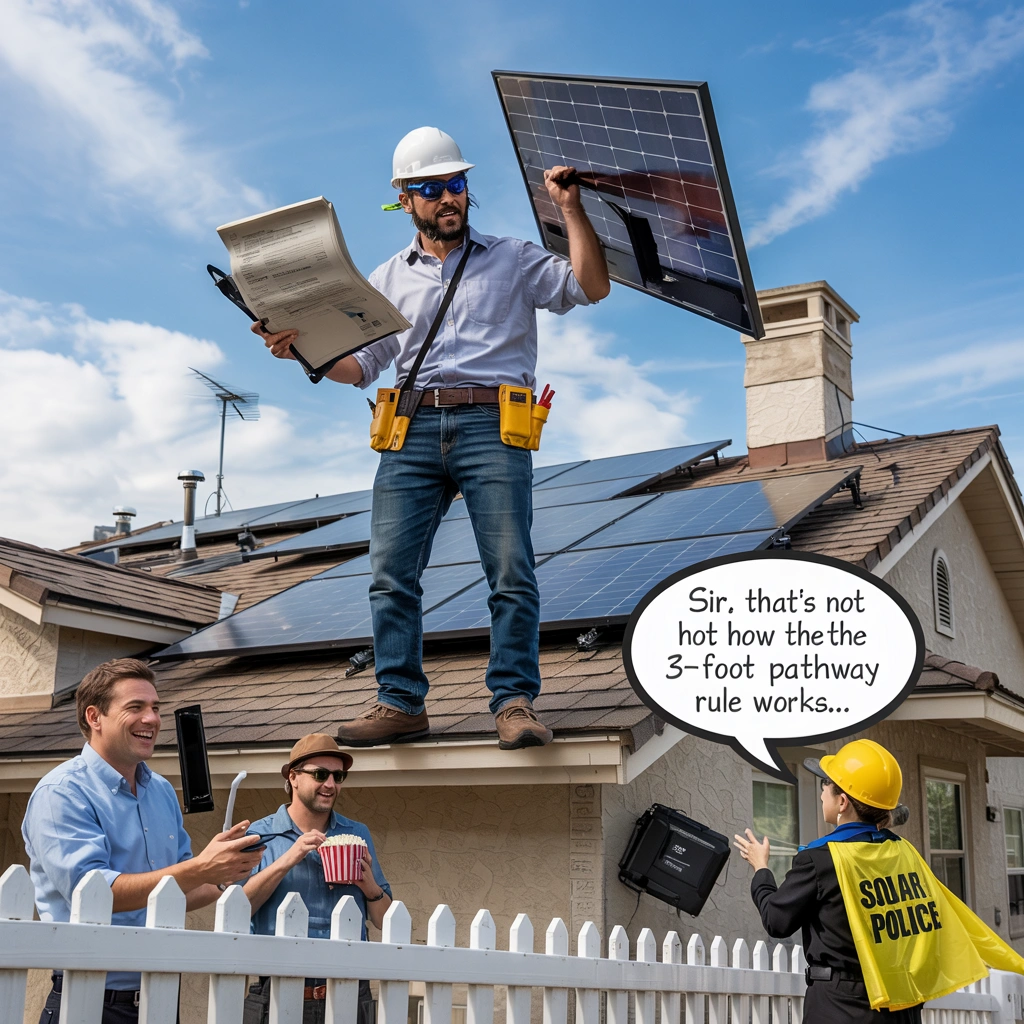
A Clark County Homeowner’s Checklist for a Smooth Solar Installation
Summary: Installing solar panels in Clark County involves specific permit sequences and fire code requirements that many homeowners overlook—but Nevada’s new Senate Bill 440 creates important protections that could save you thousands if you know how to use them correctly. Key Takeaways Clark County requires zoning approval before electrical permit submission, with specific fire code clearance requirements for roof access Nevada’s Senate Bill 440, effective October 1, 2025, protects homeowners’ solar rights while requiring HOAs to respond to installation requests within 15-35 days Working with the Nevada State Contractors Board licensed installers ensures eligibility for NV Energy incentives and proper permit compliance The inspection sequence follows a specific order: electrical rough-in, structural review, and net metering application through PowerClerk Homeowners can maximize their 30% federal tax credit through proper project cost budgeting before the December 31, 2025, expiration Nevada’s Solar Bill of Rights Protects Your Investment With Safety Requirements Nevada’s solar legislation creates a protective framework for homeowners investing in renewable energy systems. The state’s Solar Bill of Rights establishes clear safety standards and regulatory guidelines that prevent costly installation mistakes while ensuring long-term system performance. These protections extend beyond basic consumer rights to include specific technical requirements that safeguard both property values…

Choosing the Best Solar Panels & Equipment for Las Vegas’s Climate
Summary: Las Vegas homeowners installing solar panels face a costly mistake most don’t see coming. When roof temperatures hit 150°F, the wrong panel choice can cost you thousands over 25 years—but there’s a specific specification that changes everything. Key Takeaways: Las Vegas solar panels should have temperature coefficients of -0.30%/°C or better to minimize power loss in 150°F+ roof temperatures Monocrystalline panels typically outperform polycrystalline by 8-15% in extreme desert heat conditions Regular cleaning and professional maintenance maximize energy production in dusty desert conditions Climate-optimized solar equipment can increase ROI by $3,000-5,000 over 25 years compared to standard panels Why Temperature Coefficients Matter More Than Efficiency in 150°F Vegas Heat Las Vegas homeowners face a unique solar challenge. While the city receives over 290 sunny days annually, roof temperatures regularly hit 150°F during the summer months. Most solar panels lose efficiency as temperatures climb above 77°F, making equipment selection critical for maximizing energy production and return on investment. The temperature coefficient measures how much power output decreases for every degree Celsius above 25°C (77°F). In Las Vegas conditions where panels operate at 66°C (150°F), the difference between a premium panel with a -0.26%/°C coefficient and a standard panel at -0.45%/°C represents thousands of…
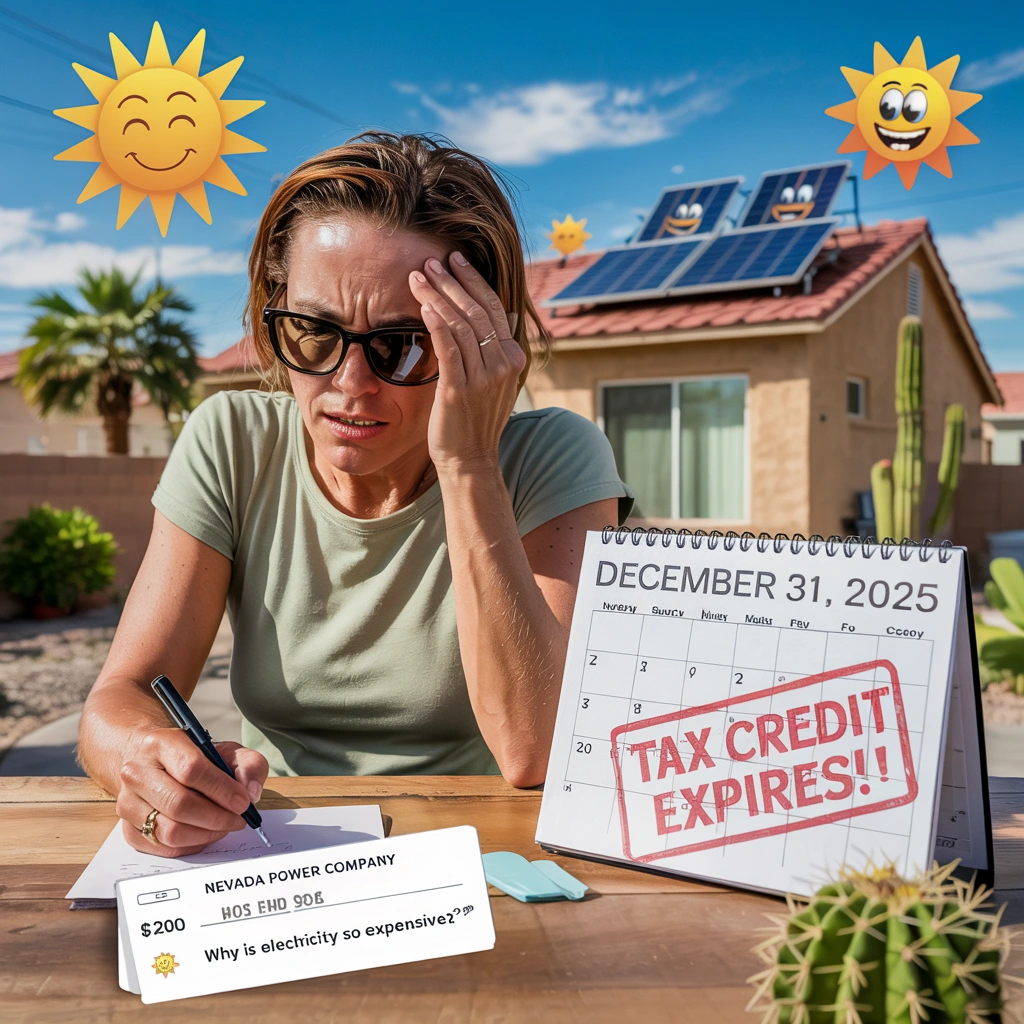
The Ultimate Guide to Solar Financing & Incentives for Las Vegas Homeowners
Summary: Las Vegas homeowners have just months left to capture a massive 30% federal tax credit worth up to $5,102 before it expires forever on December 31, 2025—but there’s a crucial timing factor most don’t realize. Key Takeaways The 30% federal tax credit expires December 31, 2025, potentially saving Las Vegas homeowners $3,263 to $5,102 on typical solar systems Four main financing options exist: cash purchase, solar loans, leases, and PPAs—each offering different benefits and long-term savings Zero-down solar programs are available with monthly payments often lower than current electricity bills NV Energy’s net metering offers 75% retail credit rates locked for 20 years for existing customers, though changes may be coming Solar installation typically takes 2-6 months, making immediate action necessary to capture 2025 incentives 30% Federal Tax Credit May Expire December 31, 2025 — Las Vegas Homeowners Can Cut Energy Bills Starting Day One Las Vegas homeowners face a time-sensitive decision window. The 30% federal Investment Tax Credit (ITC) expires after December 31, 2025, with no extension planned. This represents the largest single incentive available for residential solar installations, potentially saving thousands of dollars that will disappear forever in just months. For a typical 5kW system costing $10,875 before incentives, the…